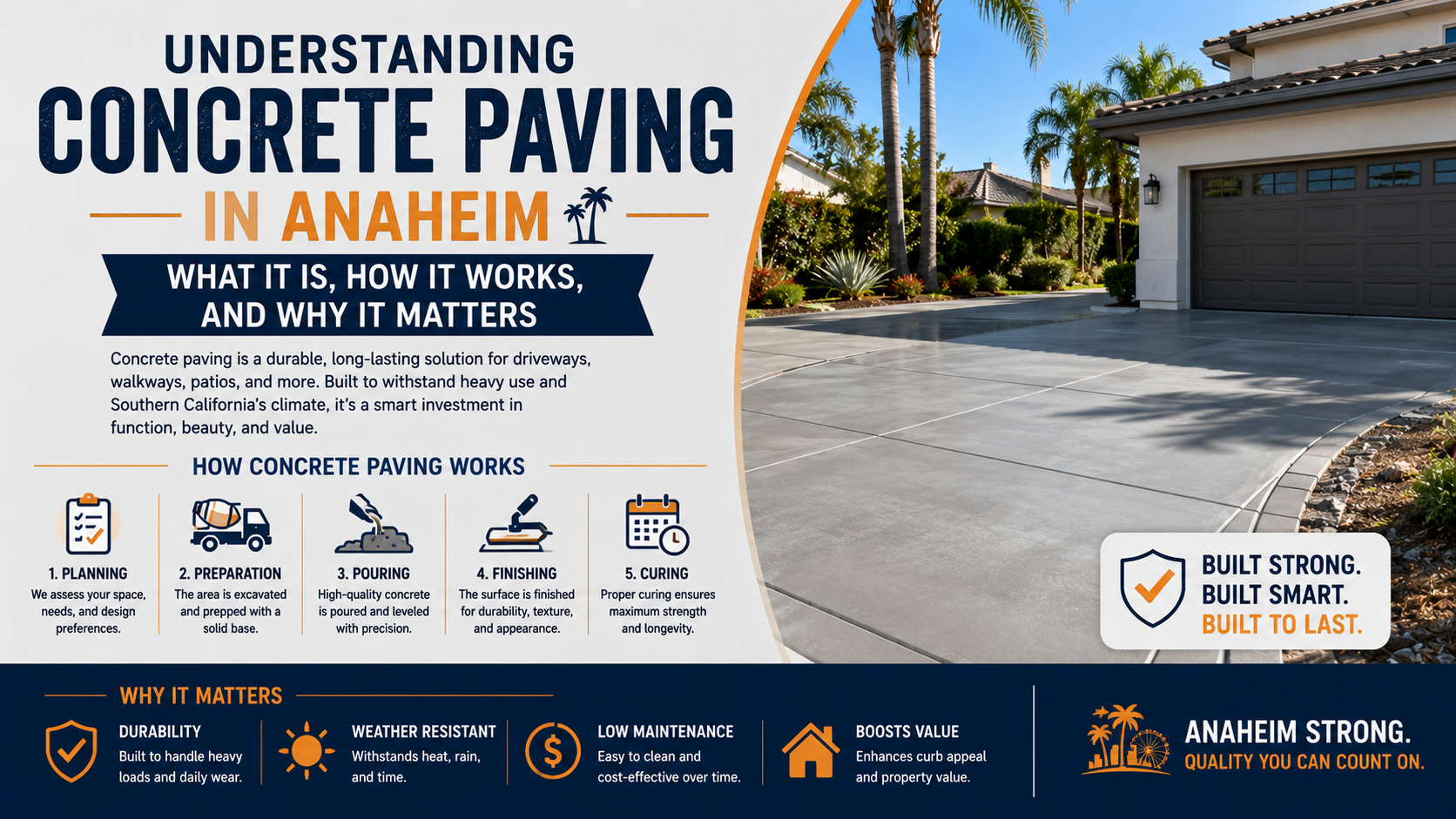
Concrete paving is one of the most versatile and long-lasting surface solutions available for residential and commercial properties. In Anaheim, California a city of over 340,000 residents spread across diverse neighborhoods from Anaheim Hills to West Anaheim understanding the fundamentals of concrete paving can help property owners make smarter decisions about their driveways, walkways, patios, parking areas, and more. This article explores everything you need to know about Concrete Paving Anaheim: what it is, the different types available, how the process works, common applications, and what factors influence the longevity of a concrete surface in Southern California’s unique climate.
What Is Concrete Paving?
Concrete paving refers to the installation of a durable, hardened surface made from a mixture of cement, water, sand, and aggregate materials such as gravel or crushed stone. Once mixed and poured, this material undergoes a chemical process called hydration, during which it hardens and gains structural strength over time. Unlike asphalt which is petroleum-based and flexible concrete is a rigid material known for its compressive strength and durability under heavy loads. It is widely used across Anaheim for driveways, sidewalks, pool decks, patios, commercial parking lots, and road construction.
Concrete paving has been used in infrastructure construction for centuries, though modern formulations and placement techniques have made it significantly more reliable and customizable. Today, concrete can be stamped, stained, polished, colored, and textured to suit both functional and decorative purposes.
Types of Concrete Paving Available in Anaheim
Not all concrete paving is the same. Property owners in Anaheim can choose from several varieties depending on their needs:
Standard Poured Concrete: This is the most common form used for driveways, sidewalks, and foundations. It is poured directly onto a prepared base, then leveled and finished before it sets.
Stamped Concrete: A decorative option where patterns mimicking brick, slate, stone, or wood are pressed into the surface before it fully cures. Stamped concrete is popular for patios, pool decks, and entryways because it combines the visual appeal of natural materials with the durability of concrete.
Exposed Aggregate Concrete: The surface layer of cement is washed away while the concrete is still fresh, revealing the embedded aggregate (pebbles, stones, or glass). This creates a textured, slip-resistant surface with unique aesthetic character.
Colored Concrete: Pigments are added to the concrete mix or applied as a surface treatment to achieve specific colors. This is often combined with stamping techniques to create a more natural or decorative look.
Pervious (Permeable) Concrete: A specialized form with a porous structure that allows water to pass through the surface, reducing stormwater runoff. This type is increasingly relevant in urban areas like Anaheim where managing drainage is important.
Fiber-Reinforced Concrete: Steel, synthetic, or glass fibers are added to the concrete mix to increase tensile strength and reduce cracking. This is especially useful in areas with ground movement or heavy traffic.
The Concrete Paving Process Explained
Understanding how concrete paving works helps property owners appreciate what goes into a quality installation. The process generally follows these steps:
Site Preparation: Before any concrete is poured, the existing surface must be evaluated and prepared. This may involve removing old pavement, grading the soil, and ensuring proper drainage slopes so water does not pool on the finished surface.
Base Installation: A compacted aggregate base typically made of crushed gravel is laid down to provide a stable foundation for the concrete. The thickness and composition of this base layer depend on the intended use of the surface and the local soil conditions.
Form Setting: Wooden or metal forms are placed around the perimeter of the area to contain the concrete mix during pouring. These forms define the shape and edges of the final surface.
Pouring and Spreading: Ready-mix concrete is delivered by truck and poured into the prepared area. Workers spread and level the material using screeds and other tools.
Finishing: Once the concrete is leveled, finishers work the surface to achieve the desired texture. Broom finishing creates a slightly rough surface for traction, while trowel finishing creates a smoother, denser surface.
Curing: This is one of the most critical steps. Concrete must be kept moist and protected from rapid drying during the early curing period typically the first seven days to achieve its full strength. In Anaheim’s hot, dry climate, proper curing is especially important.
Sealing: Once fully cured, concrete surfaces are often sealed to protect against moisture infiltration, staining, UV fading, and general wear. Sealers can be reapplied periodically as part of ongoing maintenance.
Concrete Paving in Anaheim’s Climate
Anaheim experiences a Mediterranean climate characterized by warm, dry summers and mild, wet winters. This climate creates specific challenges and considerations for concrete paving:
Thermal Expansion and Contraction: Concrete expands in heat and contracts in cold. While temperature swings in Anaheim are less extreme than in northern climates, they still contribute to stress in concrete over time. Control joints intentional grooves cut into the concrete surface are placed at regular intervals to manage where cracks form, directing them to less visible or structurally significant locations.
UV Exposure: The intense Southern California sun can fade the surface of decorative concrete and cause surface degradation over time. High-quality sealers with UV inhibitors help protect decorative finishes.
Occasional Seismic Activity: The Anaheim area, like much of Southern California, is subject to minor seismic activity. Concrete’s rigidity means it can crack during ground movement, which is one reason why fiber reinforcement and properly spaced control joints are important features of quality installations.
Rain and Drainage: While Anaheim doesn’t experience heavy rainfall year-round, the winter rainy season can expose drainage shortcomings in a concrete installation. Proper grading during installation ensures that water drains away from structures rather than pooling on the surface or seeping into the subbase.
Common Applications of Concrete Paving in Anaheim
Concrete paving is used across a wide range of residential and commercial settings throughout Anaheim:
Residential Driveways: One of the most common uses, concrete driveways are prized for their clean appearance and long lifespan. A properly installed concrete driveway can last 30 years or more with basic maintenance.
Walkways and Sidewalks: Concrete is the standard material for sidewalks and pedestrian pathways throughout Anaheim’s neighborhoods and business districts, providing stable, accessible walking surfaces.
Patios and Outdoor Living Areas: Stamped and decorative concrete transforms backyard spaces into attractive outdoor living areas, often used around pools, barbecue areas, and garden paths.
Parking Lots: Commercial properties throughout Anaheim use concrete for parking areas because it holds up well under the weight of multiple vehicles over extended periods.
Curbs and Gutters: The curbs and gutters that line Anaheim streets are concrete structures that channel stormwater and define the boundary between the roadway and sidewalk. These require periodic inspection and repair to maintain effective drainage and pedestrian safety.
Industrial and Commercial Flooring: Warehouses, loading docks, and manufacturing facilities often use concrete floors because of their ability to withstand heavy equipment, foot traffic, and chemical exposure.
What Affects the Longevity of Concrete Paving?
Several factors determine how long a concrete surface will last in Anaheim:
Mix Quality: The ratio of cement, water, and aggregate in the mix affects the concrete’s final compressive strength. A lower water-to-cement ratio generally produces stronger, more durable concrete.
Base Preparation: A poorly prepared subbase is one of the leading causes of premature concrete failure. Soft spots, inadequate compaction, or improper drainage in the base will eventually cause the surface above to crack or settle.
Thickness: For residential driveways, a minimum thickness of four inches is typically recommended. Areas subject to heavier loads, such as commercial truck traffic, require thicker slabs.
Curing Practices: Rushing or neglecting the curing process weakens the finished product. Proper moisture retention during the initial curing period is essential for achieving design strength.
Control Joint Placement: Strategically placed control joints reduce the likelihood of random, uncontrolled cracking by giving the concrete a predetermined location to crack as it moves.
Maintenance: Applying sealers periodically, addressing small cracks before they grow, and ensuring drainage remains effective all contribute to a longer service life.
Concrete Paving vs. Other Surface Options in Anaheim
Property owners in Anaheim often compare concrete paving to asphalt or decorative pavers. Each material has its strengths:
Concrete vs. Asphalt: Concrete generally has a longer service life and requires less frequent maintenance. However, asphalt is more flexible a quality that helps it withstand seismic movement and ground settling better than rigid concrete. Asphalt is also easier and less expensive to repair in sections.
Concrete vs. Pavers: Interlocking pavers offer design flexibility and are easily replaced if individual units are damaged. However, a full paver installation can be more expensive, and paver joints require periodic maintenance to prevent weed growth and shifting.
Concrete’s key advantages include structural rigidity, long lifespan, low routine maintenance, and versatility for both decorative and functional applications all reasons why it remains one of the most widely used paving materials in Anaheim.
Frequently Asked Questions About Concrete Paving in Anaheim
How long does concrete take to cure? While concrete reaches sufficient strength to walk on in about 24 to 48 hours, it continues to gain strength over 28 days. Full vehicle traffic should be avoided for at least seven days after installation.
Can concrete be poured in summer in Anaheim? Yes, but heat management is important. Contractors typically adjust the concrete mix and schedule pours during cooler morning hours to prevent premature drying that can weaken the finished surface.
What causes concrete to crack? Cracking can result from thermal expansion and contraction, tree root intrusion, inadequate base preparation, overloading, or the natural curing process. Control joints are designed to manage where cracks occur in a controlled manner.
Is decorative concrete durable? Yes. Stamped and colored concrete is as durable as standard concrete. The decorative elements are part of the top layer and can be protected and extended with periodic sealing.
How do I maintain concrete paving? Keep the surface clean, apply a fresh sealer every two to three years, address cracks promptly with an appropriate filler, and ensure drainage remains clear of debris.
Conclusion
Concrete paving in Anaheim is far more than a simple matter of mixing and pouring. It involves material science, site engineering, climate considerations, and ongoing maintenance all working together to produce a surface that serves its purpose reliably for decades. Whether you are planning a residential driveway installation, a commercial parking lot, or a decorative patio, understanding these fundamentals equips you to make informed decisions about your property.